
Smoked Beef Brisket
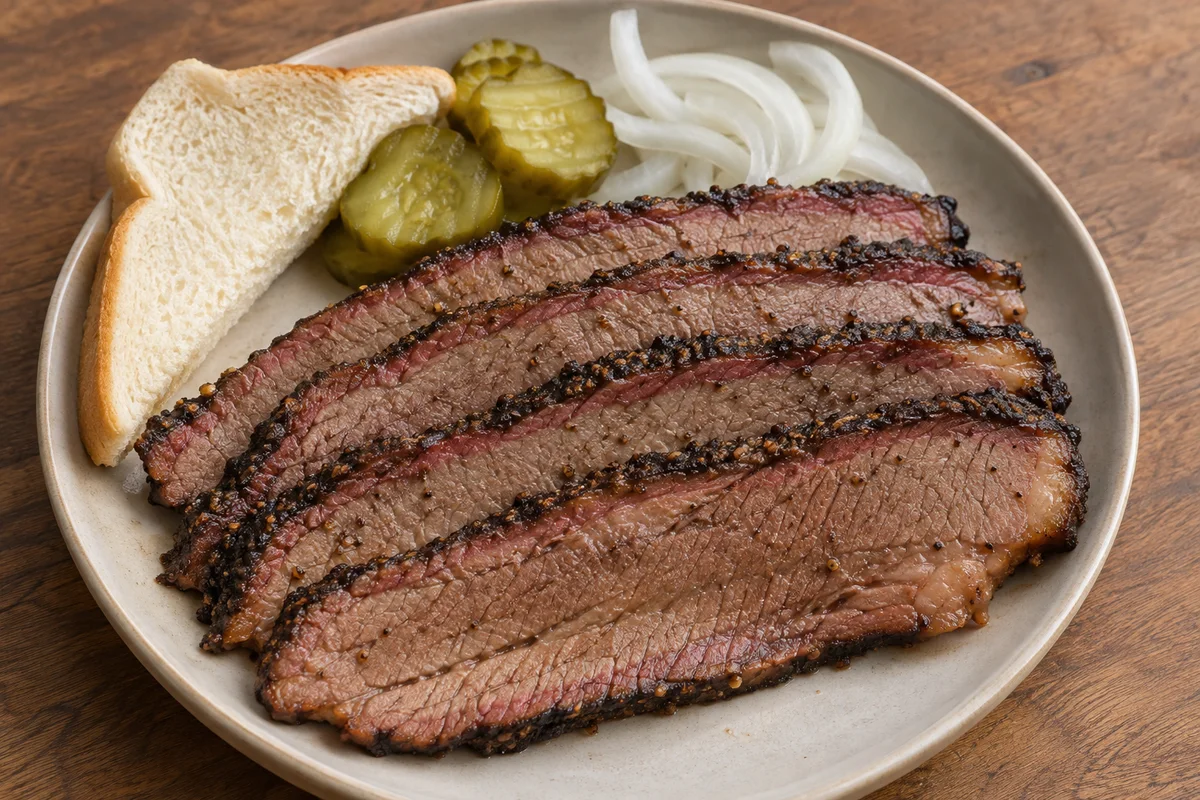
A whole packer brisket with a simple salt and pepper rub, smoked low and slow, wrapped in butcher paper and rested for hours until it's tender and juicy.
- Full Meals
- Smoker
- Beef
- Dinner
- 900 min total
- Serves 16
Ingredients
Ingredients for servings
Enter a number of at least ½, in steps of ½.
Original recipe serves 16. Ingredient amounts adjust automatically. Cooking times and pan size may need adjusting separately.
- 14 lb whole packer beef brisket, untrimmed weight, choice grade or better
- 1/4 cup kosher salt, coarse
- 1/4 cup black pepper, coarse ground, 16 mesh if you can find it
- 1 tbsp garlic powder, optional
- 1 cup beef broth or water, for spritzing
- 4 tbsp beef tallow or butter, optional, for wrapping
To serve
- white bread, pickles, onions and barbecue sauce, for serving
Gear
- Smoker
- Oak or hickory wood
- Leave-in probe thermometer
- Pink butcher paper
- Long slicing knife
- Cooler and towels
Some gear links may be affiliate links. Disclosure.
Steps
Step 1: TRIM (night before): With a sharp knife, trim the hard fat on the fat side down to about 1/4 inch. Remove the thick, hard fat between the point and the flat, and square up thin, ragged edges so they don't burn.
Step 2: Mix the salt, pepper and garlic powder. Season every side evenly and generously. Refrigerate uncovered overnight.
Step 3: Heat the smoker to 250°F with oak or hickory. Put the brisket on fat-side up (or toward the heat source if your smoker has one hot side), with the thick point toward the hotter end.
Step 4: Smoke until the bark is dark and firm and doesn't smear when you touch it, and the inside reads 165 to 175°F, about 8 to 10 hours. Spritz with broth every hour or so after the first 4 hours if edges look dry.
Step 5: Lay out two overlapping sheets of butcher paper. Smear the tallow in the middle, set the brisket on top, and wrap it tight. Return it to the smoker.
Step 6: Cook until it reaches about 200 to 205°F in the thickest part of the flat and a probe slides in with almost no resistance everywhere, about 3 to 5 more hours.
Step 7: Rest the wrapped brisket in a cooler with towels at least 2 hours, and up to 4. Don't skip this.
Step 8: Separate the point from the flat. Slice the flat against the grain into pencil-thick slices. Turn the point 90 degrees (the grain changes direction) and slice it thicker or cube it for burnt ends.
Game plan
Dinner at 6:00 PM. Brisket is a long day, so start the night before:
- Day before, evening: Trim and season. Make sides that hold well: potato salad, slaw, beans.
- 11:00 PM: Light the smoker.
- 11:30 PM to midnight: Brisket on. Check temp before bed and set an alarm for a fire check if your smoker needs tending.
- 8:00 to 10:00 AM: Look for a dark bark and 165 to 175°F. Wrap.
- 12:00 to 2:00 PM: Done when probe tender. Into the cooler.
- 5:30 PM: Warm sides. Unwrap and slice the brisket.
- 6:00 PM: Serve with white bread, pickles, onions and sauce.
Swaps
- Smaller cook: A 5 to 6 lb brisket flat takes 8 to 10 hours. Flats dry out easier, so wrap and rest them well.
- Rub: Add 1 tablespoon paprika or chili powder for more color.
- Wrap: Foil gets it done faster and juicier but softens the bark. Butcher paper is the balance.
Tips
- Every brisket is different. A 14-pounder can take 12 to 16 hours. Start early; a long rest in a cooler is better than a rushed brisket.
- Probe tenderness matters more than a single number.
- Save the rendered fat drippings for beans or for brushing on slices.
The story
HAM Cooking. Let’s fire it up.
Brisket is the boss level of backyard barbecue. It’s big, it’s expensive, it takes all night, and it does whatever it wants. I’ve learned to treat it the same way I treat a mule: show up early, be patient, and don’t take it personally.
A brisket is two muscles stacked together: the lean flat and the fatty point, and they cook differently. That’s why so many briskets come out dry on one end and perfect on the other. Low heat and lots of time melt all that tough collagen into gelatin. Wrapping it in butcher paper partway through protects the meat but still lets some steam out, so you keep a good bark. The long rest is the final secret; the temperature drops slowly and the meat reabsorbs juice it would have lost on the cutting board.
The simple salt and pepper rub is Central Texas style, and it lets the beef and smoke do the talking. When you pull that first slice and it bends over your finger without breaking, you’ll know the all-nighter was worth it.
HAM out.
Related recipes
 AI illustrationSmokerOvenDinnerFull Meals
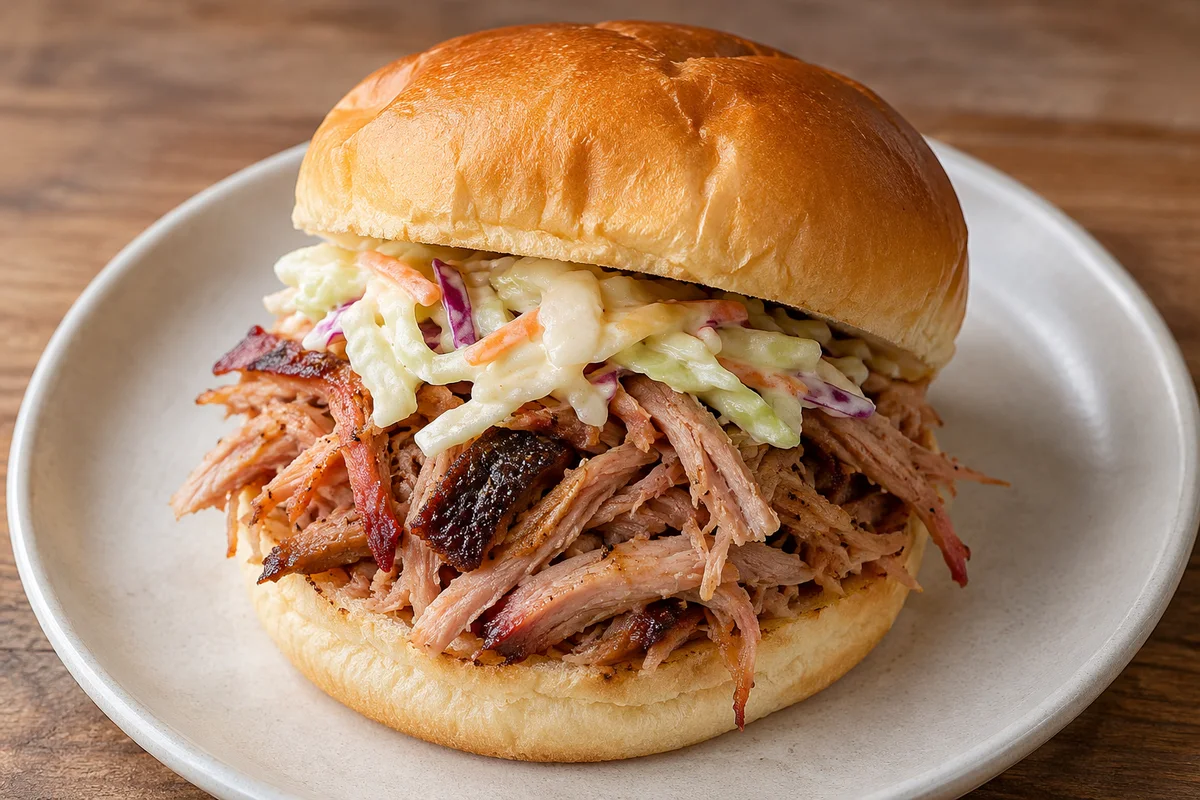
Smoked Pulled Pork with Vinegar Sauce
A rubbed pork shoulder smoked low and slow until it pulls apart, dressed with a tangy Carolina-style vinegar sauce and piled on buns with slaw.
720 min · serves 12 · Pork
 AI illustrationSmokerGrillDinnerFull Meals
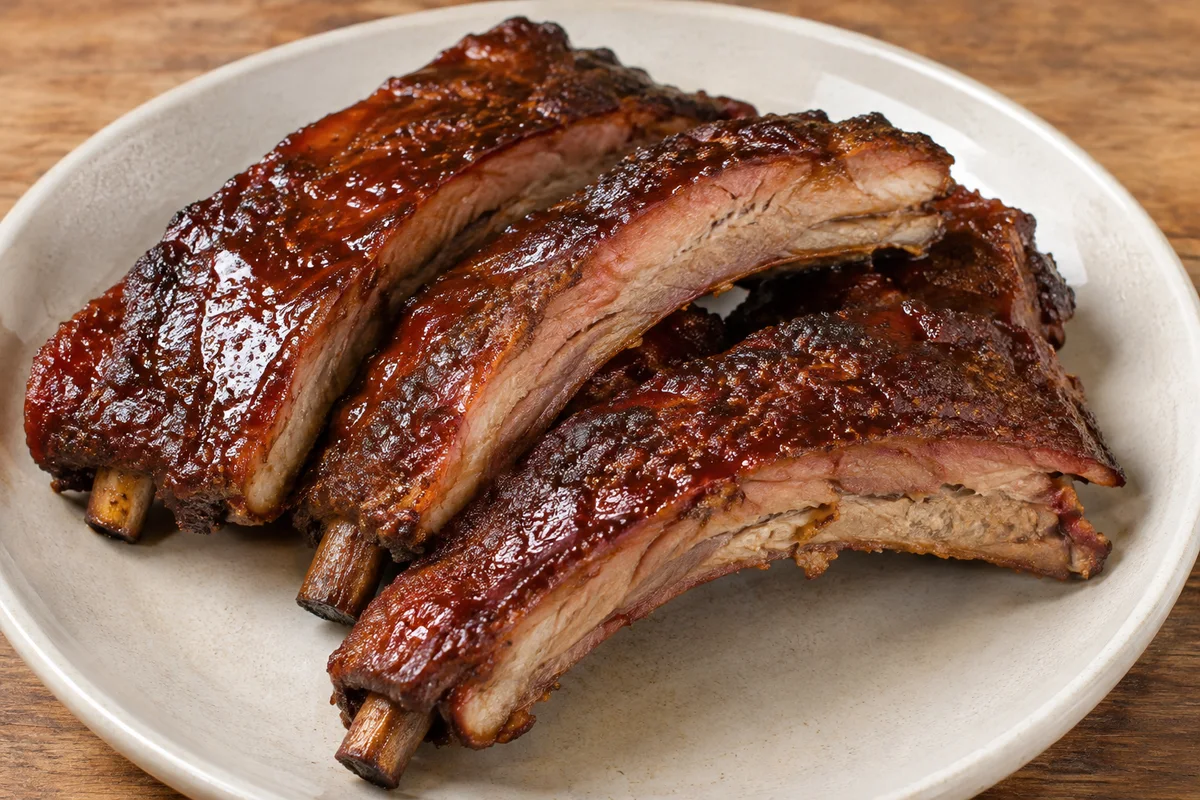
Fourth of July Baby Back Ribs
Baby back ribs with a sweet and smoky rub, cooked low on the grill or smoker, wrapped with butter and honey, then glazed with sauce. Tender, not mushy.
330 min · serves 6 · Pork
 AI illustrationGrillSmokerDinnerFull Meals
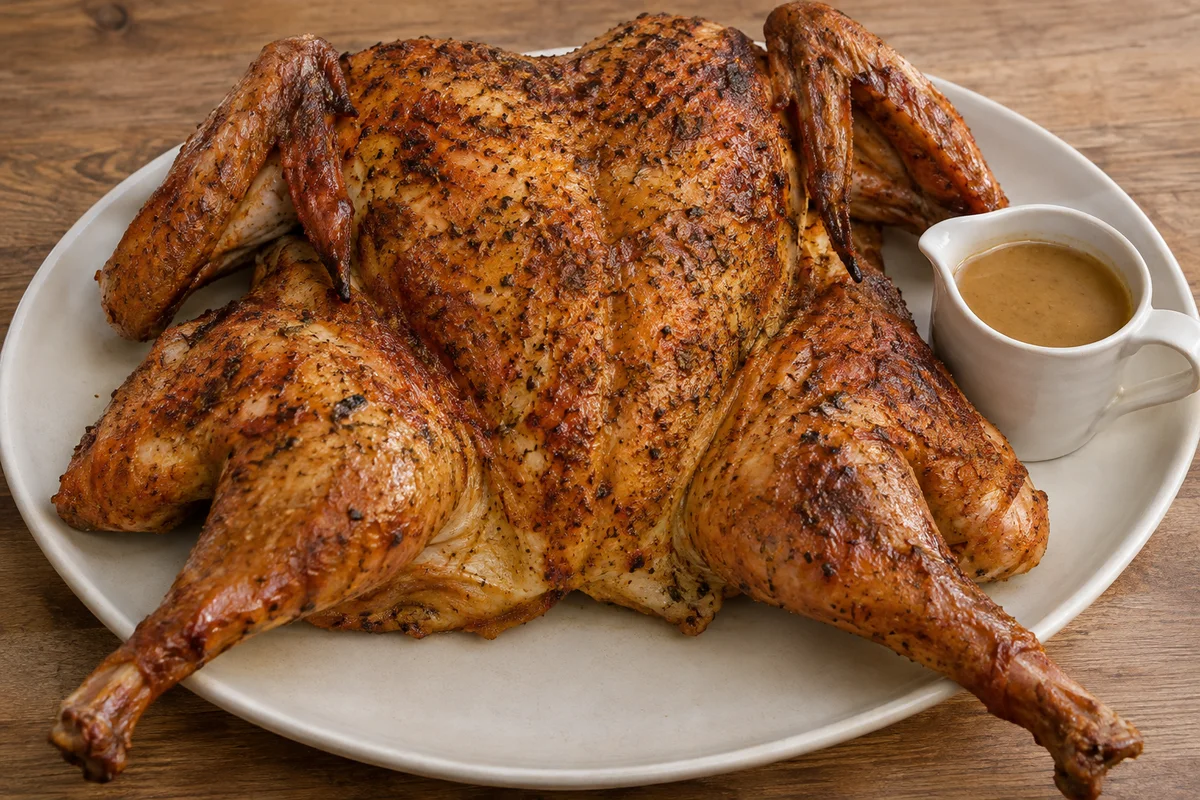
Spatchcock Turkey on the Grill
A butterflied turkey grilled over indirect heat in about 90 minutes, with crispy skin, a hint of smoke and a free oven for the sides.
150 min · serves 10 · Turkey
Cooked this? Tell us how it went.
Loading reviews…